

CANSFORD LABS
on Dec 17, 2025
When it comes to drug and alcohol testing, timing is very significant. Whether you're assessing abstinence, long-term substance use or recent consumption, understanding the windows of detection is critical when choosing the right sample type for testing.
In hair testing, the part of the body the sample is collected from, along with the length and number of scalp hair sections analysed, can significantly enhance the reliability and interpretability of the results.
Hair strand testing: a timeline of use
This type of testing is non-invasive and highly accurate. This means it can be used used to provide a reliable, long-term view of substance use and results can also be used to support a claim of cessation or abstinence from drug or alcohol use over time. This is particularly valuable in legal, workplace, and safeguarding contexts where seeing patterns of behaviour over time is so useful.
Head (scalp) hair grows at approximately 1 centimetre (cm) per month. Testing can be performed on multiple 1 cm length sections to provide results on a month-by-month basis or on longer section lengths to provide an overview of a number of months for each section analysed.
It is only possible to cut head hair samples into sections and it is recommended for when a more granular view of substance use is needed.
Body (non-scalp) hair has a similar growth rate to scalp hair but due to the growth cycle of body hair it can potentially cover a longer time frame than a comparable length of head hair. Due to the nature of body hair samples, they are analysed as a whole length and not cut into sections.
Sectional versus overview
We offer two types of head hair analysis, depending on the level of detail required:
Sectional analysis: The analyses of the hair sample as short length sections of 1.0 cm offers a more detailed picture and can highlight changes in drug use over time. This is especially useful when tracking changes in behaviour or verifying abstinence over time. Each 1 cm of head hair analysed represents a time period of approximately one month; therefore, the testing of multiple 1 cm sections of hair can be used to show any changes in drug use over the investigated time period on a month by month basis.
In some cases, it may be beneficial to analyse shorter section lengths of 0.3 cm to assist in identifying intermittent or possibly a one-off drug use or administration.
Overview analysis: The analysis of longer head hair sections provides an integrated result for the overall time period covered by the section length tested, for example a 3.0 cm length head hair section would produce a consolidated result for the approximate three month time period covered. This is beneficial for identifying any history of drug use over a longer time period.
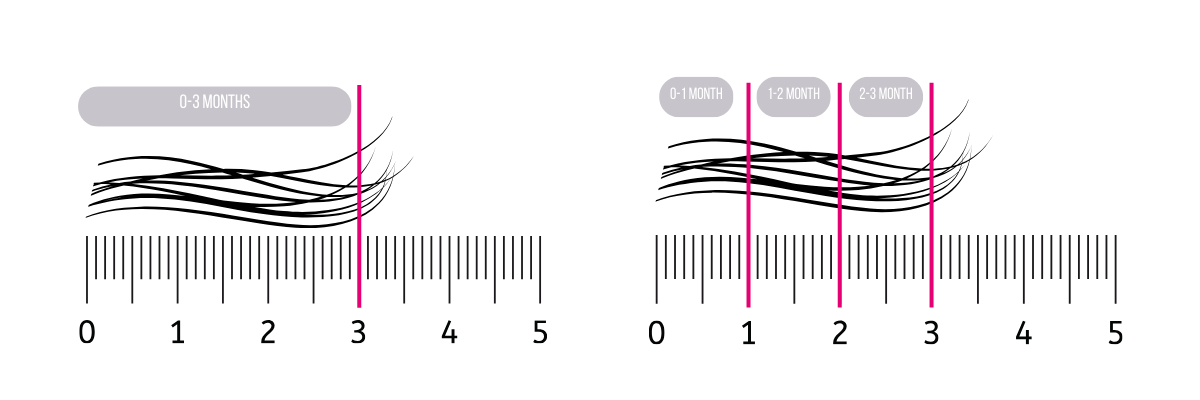
Below is a comparison of sectional analysis and overview analysis for a donor who stopped drug use approximately six months before sample collection. Both methods show a significant decrease in drug concentration. However, if only 6 cm of hair were analysed, the advantage of sectional analysis becomes clear: it provides a more detailed pattern of results than an overview analysis.
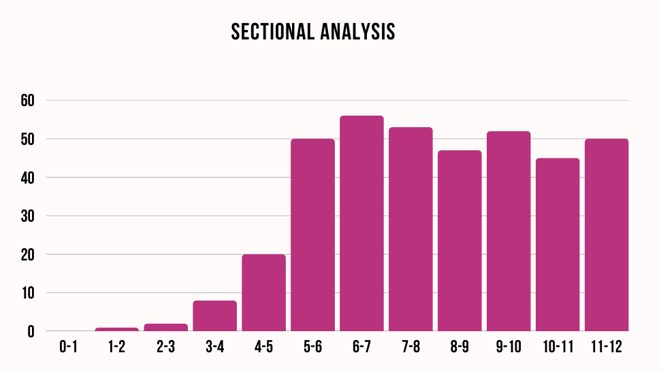
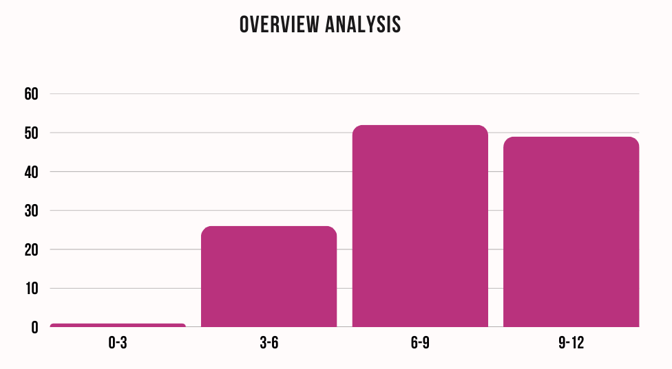 A hair strand takes around seven days to grow out of the scalp and be available for collection; therefore, all time periods provided by Cansford Laboratories commence seven days prior to the date of sample collection.
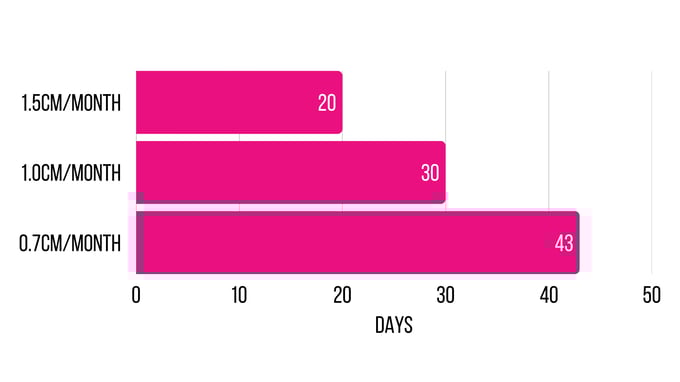
The time periods covered by the hair analyses are approximate. Whilst the average hair growth rate is 1 cm per month, the actual rate of growth for any individual could vary between the extremes of 0.7 to 1.5 cm per month. At Cansford, we estimate the time period represented by any hair section or sample based on an average hair growth rate of 1 cm per month.
The potential variation in the number of days represented by a 1 cm scalp hair section is shown below:
Alcohol testing beyond hair
The current consensus by the Society of Hair Testing (SoHT) says that an ethyl glucuronide (EtG) concentration greater than or equal to 30 picograms per milligram of hair in scalp hair sections measuring 3 cm up to 6 cm strongly suggests chronic excessive alcohol consumption.
The overview analysis of a 3 cm or 6 cm provides an integrated concentration for the approximate three or six month time period covered by the hair tested. From the overview analysis it is not possible to say when during this time period that the alcohol consumption took place, or whether there are any changes or patterns to the alcohol consumption within this time period.
The SoHT consensus also states that segmentation of the hair may provide additional information.
We are one of the only UK laboratories to offer sectional alcohol testing using EtG and ethyl palmitate (EtPa). This sectional analysis of hair is particularly useful when a person’s drinking habits have changed, such as significantly moderating the amount of alcohol consumed or ceasing to consume alcohol.
For an assessment of more recent alcohol use, phosphatidylethanol (PEth) testing via dry blood spot is a sensitive, non-invasive alternative to venous blood collection. PEth testing covers up to approximately one month prior to sample collection. The results can be used to help differentiate between low or no, moderate alcohol consumption and excessive alcohol consumption. When combined with blood EtG, which covers approximately up to 80 hours prior to sample collection, it provides a comprehensive picture of both regular and occasional drinking.
Nails
Incorporation of substances into nails mainly occurs through diffusion from the blood supply, which deposits substances to both the germinal matrix and the nail bed on the underside of the nail plate. Nails grow at a continuous rate; the average growth rate is 3 mm a month for fingernails and toenails at 1.1 mm a month.
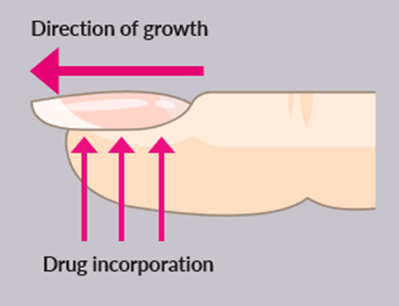
Nail testing can be beneficial when either hair has been treated with a chemical process which could affect the results, or when there is insufficient head or body hair available for collection. It is estimated that samples of nail clippings can represent up to approximately six or twelve months for fingernails and toenails, respectively.
Nail clippings can’t be sectioned to show shorter time periods, so a positive result doesn’t indicate when the drug or alcohol use occurred. The result reflects an average over about six months for fingernails or about twelve months for toenails.
Given that nail growth is significantly slower than hair growth, these testing methods should be regarded as complementary rather than interchangeable with hair.
Why windows of detection matter
Windows of detection refers to the time frames during which a substance can be detected in a biological sample. Hair, nails, and blood each show drug or alcohol use over different time periods, so it’s important to choose the sample type that best fits the purpose of the test.
For example, hair testing can be used to detect alcohol use over several months, while PEth or blood EtG testing is better suited for identifying recent alcohol consumption, or abstinence. Nail testing, although representing a long time period, can provide complementary insights when hair samples aren’t available.
Final thoughts
Understanding windows of detection is essential when instructing testing. For example, if the donor claims to have ceased drug use within the period covered by an overview hair analysis of a 3 cm head hair sample, the result could include both drug use and abstinence; therefore, such testing would not highlight the change in drug use. Alternatively, the analysis of three 1 cm head hair sections would show a significant decrease in the concentrations of the drug in question following the cessation of use.
No matter your field - family law, workplace compliance, safeguarding or something else, the right sample type can make all the difference.